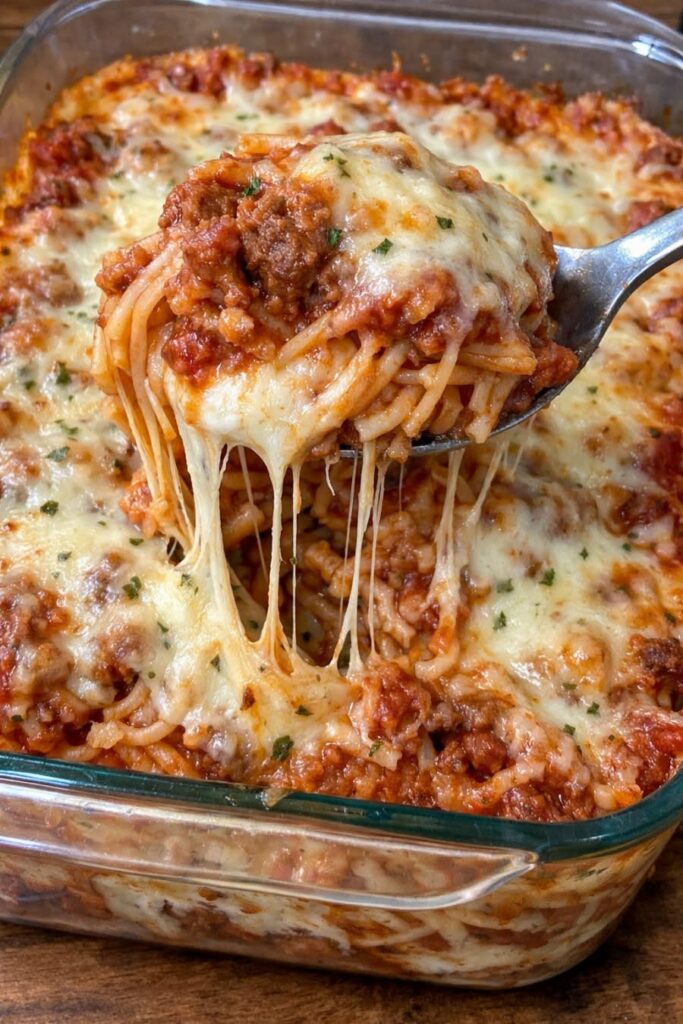
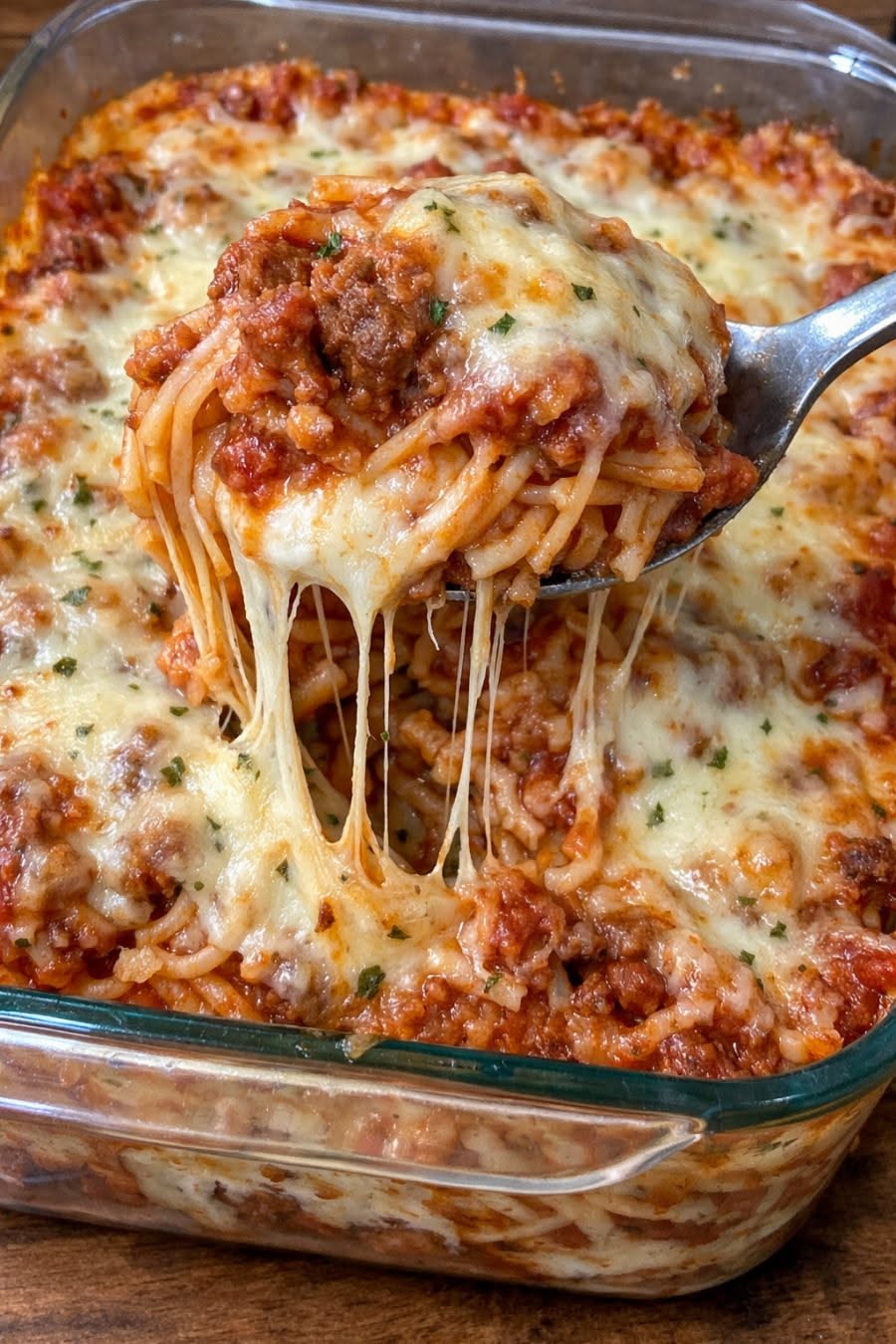
Cheesy Spaghetti is what happens when you take a humble box of spaghetti and treat it like the star of a baked pasta casserole. Think of the sauce as a warm blanket: a silky cheese sauce clings to every strand, then a hot oven turns the top into a golden, slightly crisp lid you have to crack with a fork.
Advertisements1
The technique is simple, but timing matters. Pasta keeps cooking after it leaves the water, a process called carryover cooking, so we pull it one minute shy of al dente. That small pause is the difference between tender strands and mushy ones, the same way a steak resting off the grill finishes gently instead of overcooking.
This is a weeknight-friendly dish that still feels like a Sunday supper. You will build a roux, melt the cheese off the heat so it stays smooth, toss everything together, and bake until the edges bubble. Stay curious, stay safe.
Why You'll Love This Recipe
About the Ingredients
1 lb (454 g) spaghetti
Use regular dried spaghetti, not fresh, so it holds up in the oven. A good substitution is linguine or bucatini if you want a thicker chew.
4 tbsp (56 g) unsalted butter
Butter gives the roux a nutty base; salted butter works if you cut the added salt in half. Buy European-style butter for a richer flavor if your store carries it.
4 tbsp (32 g) all-purpose flour
Flour thickens the milk into a sauce, like a gentle glue that holds the cheese in place. For a gluten-free version, use an equal amount of cornstarch.
3 cups (710 ml) whole milk, warmed
Warm milk blends into the roux without lumps; 2 percent works but gives a thinner sauce. For a richer result, swap in half-and-half for one cup of the milk.
2 cups (226 g) shredded low-moisture mozzarella
Low-moisture mozzarella melts into long, stretchy strands instead of releasing water. Fresh mozzarella is delicious but watery, so drain and pat it dry before using.
1 1/2 cups (170 g) shredded sharp cheddar
Sharp cheddar adds a tangy backbone; medium cheddar is milder for kids. Buy blocks and shred them yourself because pre-shredded cheese is coated with starch that resists melting.
1/2 cup (50 g) finely grated parmesan
Parmesan brings salty, savory depth and helps the top brown. Pecorino Romano is a sharper, saltier substitute, so reduce the added salt if you use it.
1 tsp garlic powder
Garlic powder spreads even flavor without chunks; 2 minced fresh cloves work too. Add fresh garlic to the butter first and cook 30 seconds before the flour.
1/2 tsp kosher salt, plus more for the pasta water
Kosher salt seasons gently; table salt is twice as salty by volume, so use half. Taste the sauce before baking because cheese adds salt too.
1/4 tsp freshly ground black pepper
Fresh pepper adds a warm bite; white pepper keeps the sauce visually clean. Grind it right before adding for the strongest aroma.
2 tbsp (28 g) extra butter, melted, for the top
Brushing melted butter on top encourages browning and a subtle crisp edge. Olive oil works as a substitute but browns a little faster.
2 tbsp panko breadcrumbs
Panko creates a light, crunchy crust; regular breadcrumbs are denser. For a gluten-free topping, use crushed gluten-free cornflakes.
Tips & Tricks
Pull the pasta early
Boil spaghetti one minute less than the package says, because it finishes cooking in the hot oven and absorbs sauce.
Melt cheese off the heat
Add shredded cheese only after the pot leaves the burner, since high heat makes cheese break into greasy clumps, a problem called seizing.
Season the water like the sea
Use about 1 tablespoon of kosher salt per gallon of water so the pasta itself tastes seasoned, not just the sauce.
Let it rest before serving
Wait 10 minutes after baking so the sauce sets and the slices hold together instead of running across the plate.
Pro Tips
Step-by-Step Instructions
1. Heat Oven and Boil Pasta
Heat the oven to 375 F (190 C). Boil the spaghetti in well-salted water for 1 minute less than the package directs, about 9 minutes, until it bends but still has a firm bite at the center; drain and set aside.
2. Make the Roux
In a large oven-safe skillet, melt 4 tablespoons of butter over medium heat, about 1 minute, until it foams but does not brown. Whisk in the flour and cook for 1 to 2 minutes, stirring constantly, until the mixture smells toasty and looks like wet sand.
3. Build the Sauce
Pour in the warm milk in a steady stream while whisking, then add garlic powder, salt, and pepper. Simmer for 3 to 4 minutes, whisking, until the sauce coats the back of a spoon and no flour taste remains.
4. Melt the Cheese
Remove the skillet from the heat and stir in the mozzarella, cheddar, and parmesan in three additions, stirring until each melts before adding more. The sauce should look glossy and drip slowly off the whisk.
5. Combine Pasta and Sauce
Add the drained spaghetti to the skillet and toss with tongs for 1 to 2 minutes until every strand is coated and the sauce pools slightly at the bottom. If it looks thick, splash in reserved pasta water one tablespoon at a time.
6. Top and Bake
Brush the top with 2 tablespoons melted butter, then scatter the panko over the surface. Bake at 375 F (190 C) for 20 to 25 minutes, until the edges bubble and the top is golden brown, about 2 minutes longer for a deeper crust.
7. Rest and Serve
The center should read 165 F (74 C) on an instant-read thermometer, and the cheese should pull into stretchy strands when a fork lifts the top. Rest 10 minutes, then serve hot.
Delicious Variations
Spicy Sausage Cheesy Spaghetti
Brown 12 ounces of hot Italian sausage in the skillet first, then build the sauce in the drippings for a smoky, spicy kick.
Chicken Alfredo Cheesy Spaghetti
Fold in 2 cups of shredded rotisserie chicken and swap the cheddar for an extra cup of parmesan for a milder, creamier bake.
Baked Cheesy Spaghetti Bites
Press the cooled mixture into a greased muffin tin, top with extra panko, and bake at 400 F (200 C) for 15 minutes for pull-apart party bites.
How to Store Cheesy Spaghetti
Refrigerator
Store leftovers in an airtight container in the refrigerator for up to 4 days; cool to room temperature within 2 hours first for food safety.
Freezer
Freeze portions in freezer-safe containers for up to 2 months, pressing out air and labeling with the date. Thaw overnight in the refrigerator before reheating.
Reheating
Reheat covered in a 350 F (175 C) oven for 15 to 20 minutes, or microwave single portions for 90 seconds with a splash of milk to restore creaminess.
Frequently Asked Questions
Q: Can I make cheesy spaghetti ahead of time?
Yes, you can assemble the whole dish up to 24 hours ahead and refrigerate it covered. Add 5 to 10 extra minutes of baking time because the casserole starts cold, and check that the center reaches 165 F (74 C).
Q: Why did my cheese sauce turn grainy?
The cheese was likely added over heat that was too high, which causes the proteins to squeeze out fat and turn grainy. Take the pan off the burner, let it cool for a minute, and stir the cheese in slowly until smooth.
Q: What pasta works best for cheesy spaghetti?
Dried spaghetti or linguine works best because it holds its shape and absorbs the sauce without turning mushy. Avoid angel hair, which overcooks quickly, and fresh pasta, which can dissolve into the bake.
Q: Can I use pre-shredded cheese for this recipe?
You can, but pre-shredded cheese melts less smoothly because of the anti-caking starch coating. Shredding a block of mozzarella and cheddar yourself takes five minutes and gives a noticeably creamier sauce.
Q: How do I know when the casserole is fully baked?
Look for bubbling edges and a golden brown top, and confirm the center reads 165 F (74 C) on a thermometer. If the top browns before the middle is hot, tent it loosely with foil and keep baking.
Grab your biggest skillet, shred the cheese fresh, and give this cheesy spaghetti a try this week. Once you nail the sauce-to-pasta ratio, you can bend the recipe toward whatever your family loves. Stay curious, stay safe.
Cheesy Spaghetti
Cheesy Spaghetti turns a pound of pasta into a creamy, bubbling baked casserole with three cheeses and a golden crisp top.
🧂 Ingredients
- 1 lb (454 g) spaghetti
- 4 tbsp (56 g) unsalted butter
- 4 tbsp (32 g) all-purpose flour
- 3 cups (710 ml) whole milk, warmed
- 2 cups (226 g) shredded low-moisture mozzarella
- 1 1/2 cups (170 g) shredded sharp cheddar
- 1/2 cup (50 g) finely grated parmesan
- 1 tsp garlic powder
- 1/2 tsp kosher salt, plus more for the pasta water
- 1/4 tsp freshly ground black pepper
- 2 tbsp (28 g) extra butter, melted, for the top
- 2 tbsp panko breadcrumbs
📋 Instructions
- 1Heat Oven and Boil Pasta — Heat the oven to 375 F (190 C). Boil the spaghetti in well-salted water for 1 minute less than the package directs, about 9 minutes, until it bends but still has a firm bite at the center; drain and set aside.
- 2Make the Roux — In a large oven-safe skillet, melt 4 tablespoons of butter over medium heat, about 1 minute, until it foams but does not brown. Whisk in the flour and cook for 1 to 2 minutes, stirring constantly, until the mixture smells toasty and looks like wet sand.
- 3Build the Sauce — Pour in the warm milk in a steady stream while whisking, then add garlic powder, salt, and pepper. Simmer for 3 to 4 minutes, whisking, until the sauce coats the back of a spoon and no flour taste remains.
- 4Melt the Cheese — Remove the skillet from the heat and stir in the mozzarella, cheddar, and parmesan in three additions, stirring until each melts before adding more. The sauce should look glossy and drip slowly off the whisk.
- 5Combine Pasta and Sauce — Add the drained spaghetti to the skillet and toss with tongs for 1 to 2 minutes until every strand is coated and the sauce pools slightly at the bottom. If it looks thick, splash in reserved pasta water one tablespoon at a time.
- 6Top and Bake — Brush the top with 2 tablespoons melted butter, then scatter the panko over the surface. Bake at 375 F (190 C) for 20 to 25 minutes, until the edges bubble and the top is golden brown, about 2 minutes longer for a deeper crust.
- 7Rest and Serve — The center should read 165 F (74 C) on an instant-read thermometer, and the cheese should pull into stretchy strands when a fork lifts the top. Rest 10 minutes, then serve hot.

Ethan writes about technology and digital privacy, focusing on how to protect your online identity without being a tech expert. He translates complex security concepts into everyday language and practical steps.