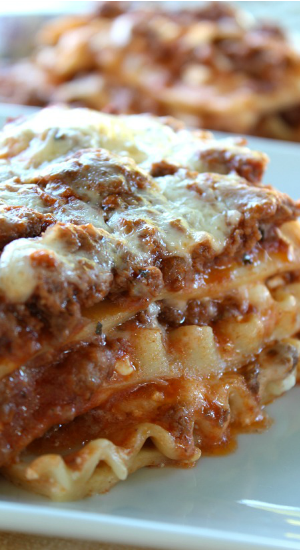
A thick lasagna fails for one measurable reason: too much water and too little structure. This version stacks six layers in a 9×13-inch (23×33 cm) pan and bakes to an internal temperature of 165F (74C), which sets the ricotta and firms the noodles so each slice stands vertical on the plate.
Advertisements1
The numbers matter here. I use 1 pound (454 g) of 80/20 ground beef, 24 ounces (680 g) of whole-milk ricotta drained for 15 minutes, and exactly 12 no-boil noodles. That ratio gives roughly 2 cups of meat sauce per layer, which is the sweet spot between saucy and soupy.
Skip the 30-minute simmer shortcut. Reducing the sauce from 4 cups to about 3 cups concentrates flavor and removes the free water that turns lasagna into a casserole soup. Total active prep is 25 minutes, bake time 50 minutes, rest time 15 minutes.
Why You'll Love This Recipe
About the Ingredients
12 no-boil lasagna noodles (about 8 oz / 227 g)
No-boil sheets save 20 minutes and absorb sauce without turning mushy. Substitute regular noodles by boiling them 2 minutes shy of the package time, then pat dry.
1 lb (454 g) ground beef, 80/20 lean-to-fat
The 20 percent fat renders into the sauce and carries flavor. Substitute ground turkey or Italian sausage, but add 1 tablespoon olive oil since both are leaner.
1 lb (454 g) bulk Italian sausage, mild or hot
Bulk sausage skips the casing-removal step. If only links are available, slit the casings and crumble the meat with your fingers.
2 jars (24 oz / 680 g each) marinara sauce
Buy a brand with no added sugar and under 500 mg sodium per half cup. Substitute crushed San Marzano tomatoes plus 1 teaspoon salt for a fresher, thinner sauce.
24 oz (680 g) whole-milk ricotta
Whole-milk ricotta is firmer and less watery than part-skim. Drain it in a fine-mesh strainer for 15 minutes; if you only have part-skim, drain for 30 minutes.
2 large eggs
Eggs bind the ricotta so it sets instead of weeping. Substitute 3 tablespoons of aquafaba for an egg-free version, though the set will be slightly softer.
3 cups (340 g) shredded low-moisture mozzarella
Low-moisture mozzarella browns properly; fresh mozzarella releases water and makes the top soggy. Shred a block yourself for better melt than pre-shredded.
1 cup (100 g) finely grated Parmesan
Grate it on a Microplane so it dissolves into the ricotta rather than sitting gritty. Pecorino Romano is a sharper, saltier substitute; cut the added salt in half if you use it.
1 teaspoon dried oregano, 1 teaspoon fennel seed, 1/2 teaspoon red pepper flakes
Crush the fennel seed between your fingers to release the anise oils. Skip the fennel only if your sausage is already fennel-forward.
2 tablespoons olive oil, plus 1 teaspoon kosher salt and 1/2 teaspoon black pepper
Kosher salt dissolves more evenly than table salt in the ricotta mixture. Use 3/4 teaspoon fine sea salt if that is what you have.
Tips & Tricks
Drain Everything
Watery ricotta and unreduced sauce are the top causes of runny lasagna. Strain the ricotta 15 minutes and simmer the sauce until it coats a spoon.
Weigh Your Layers
Divide the meat sauce into three equal portions before assembly. Eyeballing leads to a dry bottom layer and an overflowing top.
Rest Before Cutting
A 15-minute rest lets the starch and cheese set. Cutting immediately gives you a puddle, not a slice.
Cover Then Uncover
Foil for the first 40 minutes traps steam to cook the noodles, then 10 minutes uncovered browns the cheese.
Pro Tips
Step-by-Step Instructions
1. Brown the meats
Heat 2 tablespoons olive oil in a 12-inch skillet over medium-high heat, 375F (190C) surface temperature, and brown the beef and sausage for 8 to 10 minutes, breaking it into 1/2-inch crumbles. You want deep brown bits, not gray steamed meat.
2. Build the sauce
Add the oregano, fennel seed and red pepper flakes and stir for 60 seconds until fragrant. Pour in both jars of marinara and simmer uncovered over medium-low heat for 20 minutes, until reduced to about 3 cups and thick enough to mound on a spoon.
3. Mix the ricotta
Stir the drained ricotta with the eggs, 3/4 cup of the Parmesan, 1 teaspoon kosher salt and 1/2 teaspoon pepper until smooth. It should look like thick cake batter, not crumbly cottage cheese.
4. Preheat and prep
Set a rack in the middle of the oven and preheat to 375F (190C). Lightly grease a 9×13-inch (23×33 cm) baking dish so the bottom noodle does not weld to the pan.
5. Layer the lasagna
Spread 1 cup meat sauce on the bottom, then 4 noodles, half the ricotta mixture, 1 cup mozzarella and 1 cup sauce. Repeat once, then finish with the last 4 noodles and the remaining sauce, mozzarella and Parmesan.
6. Bake covered
Cover tightly with foil, tenting it so it does not touch the cheese, and bake at 375F (190C) for 40 minutes. The edges should be bubbling visibly when you peek.
7. Brown the top
Remove the foil and bake another 10 to 12 minutes at 375F (190C) until the top is golden brown in spots and an instant-read thermometer in the center reads 165F (74C).
8. Rest and slice
Rest the pan on a wire rack for 15 minutes before cutting. The center will settle and firm up, which is what keeps the layers intact on the plate.
Delicious Variations
Spinach-Mushroom Vegetarian
Swap both meats for 1 lb (454 g) sauteed cremini mushrooms and 10 oz (283 g) frozen spinach squeezed dry; add 1 teaspoon smoked paprika for meaty depth.
Spicy Vodka Lasagna
Replace the marinara with 24 oz (680 g) vodka sauce and add 1/4 teaspoon cayenne to the ricotta; the creamier sauce browns faster, so check at 8 minutes uncovered.
White Chicken Alfredo
Use 4 cups shredded rotisserie chicken and 3 cups alfredo sauce instead of the red sauce and beef, and add 1/2 teaspoon nutmeg to the ricotta.
How to Store Thick Lasagna Recipe
Refrigerator
Cover tightly or wrap individual slices in foil and refrigerate up to 4 days. Keep it in the original baking dish for the first 24 hours so it sets fully.
Freezer
Cool completely, then wrap slices in plastic and foil and freeze up to 3 months. Freeze in single portions; a whole pan takes over 24 hours to thaw safely in the refrigerator.
Reheating
Reheat covered slices at 350F (175C) for 20 minutes, or microwave single slices for 90 seconds. Add 1 tablespoon of sauce or water before reheating to prevent the noodles from drying out.
Frequently Asked Questions
Q: Should I use no-boil or regular lasagna noodles?
No-boil noodles work fine in this recipe because the sauce is reduced and the pan is covered for 40 minutes, giving them enough moisture to hydrate. Regular noodles give a slightly chewier bite, but you must boil them 2 minutes under the package time or they turn to paste.
Q: Why is my lasagna watery?
Watery lasagna almost always comes from undrained ricotta and sauce that was not reduced enough. Strain the ricotta 15 minutes and simmer the sauce until it holds a mound on a spoon before assembling, and never skip the 15-minute rest after baking.
Q: How many layers should a thick lasagna have?
This recipe builds three noodle layers with two full filling layers, which is the maximum a standard 9×13-inch pan holds without overflowing. Going beyond three layers compresses the bottom noodles and they will not cook evenly.
Q: Can I make thick lasagna ahead of time?
Yes, assemble it up to 24 hours ahead, cover and refrigerate, then bake from cold at 375F (190C) for 50 minutes covered plus 12 minutes uncovered. Add 10 minutes to the covered bake time because the cold pan takes longer to reach 165F (74C) in the center.
Q: How do I know when lasagna is fully cooked?
The reliable test is an instant-read thermometer reading 165F (74C) in the center, plus bubbling edges and a golden-brown top. If the cheese browns before the center hits temperature, tent it with foil and keep baking.
Assemble it tonight, refrigerate it, and bake tomorrow for a dinner that slices clean on the first try. If you make it, note your layer count and bake time so you can dial it in next round. Stay sharp.
Thick Lasagna Recipe
Thick Lasagna Recipe with six layers of rich meat sauce, ricotta and mozzarella baked until bubbling for a slice that holds its shape every time.
🧂 Ingredients
- 12 no-boil lasagna noodles (about 8 oz / 227 g)
- 1 lb (454 g) ground beef, 80/20 lean-to-fat
- 1 lb (454 g) bulk Italian sausage, mild or hot
- 2 jars (24 oz / 680 g each) marinara sauce
- 24 oz (680 g) whole-milk ricotta
- 2 large eggs
- 3 cups (340 g) shredded low-moisture mozzarella
- 1 cup (100 g) finely grated Parmesan
- 1 teaspoon dried oregano, 1 teaspoon fennel seed, 1/2 teaspoon red pepper flakes
- 2 tablespoons olive oil, plus 1 teaspoon kosher salt and 1/2 teaspoon black pepper
📋 Instructions
- 1Brown the meats — Heat 2 tablespoons olive oil in a 12-inch skillet over medium-high heat, 375F (190C) surface temperature, and brown the beef and sausage for 8 to 10 minutes, breaking it into 1/2-inch crumbles. You want deep brown bits, not gray steamed meat.
- 2Build the sauce — Add the oregano, fennel seed and red pepper flakes and stir for 60 seconds until fragrant. Pour in both jars of marinara and simmer uncovered over medium-low heat for 20 minutes, until reduced to about 3 cups and thick enough to mound on a spoon.
- 3Mix the ricotta — Stir the drained ricotta with the eggs, 3/4 cup of the Parmesan, 1 teaspoon kosher salt and 1/2 teaspoon pepper until smooth. It should look like thick cake batter, not crumbly cottage cheese.
- 4Preheat and prep — Set a rack in the middle of the oven and preheat to 375F (190C). Lightly grease a 9×13-inch (23×33 cm) baking dish so the bottom noodle does not weld to the pan.
- 5Layer the lasagna — Spread 1 cup meat sauce on the bottom, then 4 noodles, half the ricotta mixture, 1 cup mozzarella and 1 cup sauce. Repeat once, then finish with the last 4 noodles and the remaining sauce, mozzarella and Parmesan.
- 6Bake covered — Cover tightly with foil, tenting it so it does not touch the cheese, and bake at 375F (190C) for 40 minutes. The edges should be bubbling visibly when you peek.
- 7Brown the top — Remove the foil and bake another 10 to 12 minutes at 375F (190C) until the top is golden brown in spots and an instant-read thermometer in the center reads 165F (74C).
- 8Rest and slice — Rest the pan on a wire rack for 15 minutes before cutting. The center will settle and firm up, which is what keeps the layers intact on the plate.

Liam covers personal finance for young professionals, with a no-nonsense approach to budgeting and investing. He shares strategies he's tested while paying off his own student loans.