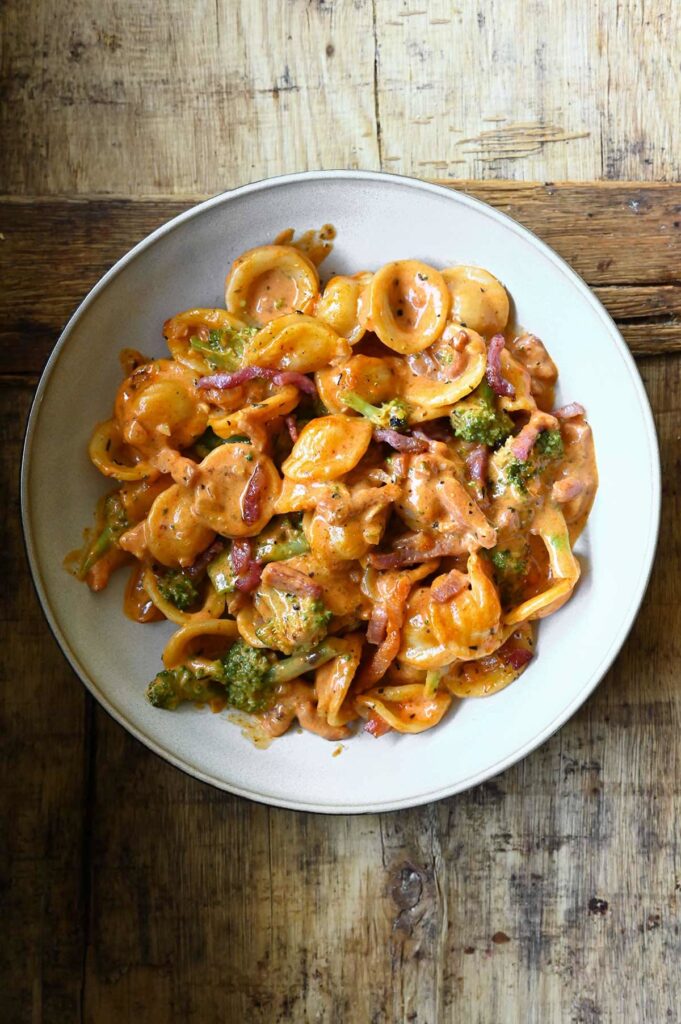
Spicy Orecchiette Pasta is the kind of dish that makes a Tuesday feel like a trattoria night. Orecchiette means "little ears" in Italian, and each one is a tiny shallow cup, like a spoon made of pasta, that traps the spicy sauce instead of letting it slide off. That single shape decision is why this bowl tastes so much bigger than its short ingredient list.
Advertisements1
The heat here is layered, not just dumped in. Crushed red pepper blooms in warm olive oil, Calabrian chili paste adds a fruity slow burn, and a spoon of pasta water ties everything into a glossy sauce that coats rather than pools. If you have ever had a spicy pasta that turned out bitter or greasy, it almost always came down to oil temperature and timing, and we will handle both.
You will need one large pot and one wide skillet, about 35 minutes of actual cooking, and no special equipment. Treat the recipe as a checklist: bloom the chili gently, salt the water like the sea, and save that starchy pasta water. Stay curious, stay safe.
Why You'll Love This Recipe
About the Ingredients
1 lb (454 g) dried orecchiette pasta
Dried orecchiette has the firmest bite and best cup shape for holding sauce. If you cannot find it, shell pasta or cavatelli are the closest substitutes; fresh orecchiette works too but cooks in about 4 minutes.
1/3 cup (80 ml) extra-virgin olive oil
Use a mid-range olive oil you actually like the taste of, since it carries the chili flavor. A light or refined olive oil works if you find robust oils too peppery here.
6 garlic cloves, thinly sliced
Fresh sliced garlic gives sweet, mellow notes; pre-minced jarred garlic tastes sharper and burns faster. Buy firm, tight heads and avoid any with green sprouts, which turn bitter.
1 1/2 tsp crushed red pepper flakes
This is the main heat source, so taste your flakes first, as brands vary wildly. Aleppo pepper or gochugaru are milder swaps if you want less burn with more fruitiness.
2 tbsp Calabrian chili paste
Calabrian chili paste is a jarred Italian condiment that is fruity, salty, and moderately hot. Substitute an equal amount of harissa or sambal oelek if your store does not carry it.
1 can (28 oz / 794 g) whole peeled San Marzano tomatoes, crushed by hand
Whole tomatoes crushed by hand give a rustic, uneven texture that grabs the pasta. Canned crushed tomatoes are fine in a pinch, but avoid tomato puree, which is too thick and sweet.
1/2 cup (50 g) grated Pecorino Romano
Pecorino is salty and sharp, which balances the chili; Parmigiano-Reggiano is a milder substitute. Buy a wedge and grate it yourself, since pre-shredded cheese is coated in starch and will not melt smoothly.
3 tbsp cold unsalted butter, cut into pieces
Butter rounds out the heat and makes the sauce glossy instead of oily. Vegan butter or an extra 2 tablespoons of olive oil will work if you are keeping it dairy-free.
1/2 cup (20 g) fresh flat-leaf parsley, chopped
Parsley adds a clean, grassy finish that cuts through the richness. Basil is a fine swap, but add it off the heat so it does not turn dark.
Kosher salt and freshly cracked black pepper, to taste
Kosher salt dissolves evenly in pasta water; if using fine table salt, start with about two-thirds the amount. Do not skip tasting the water, it should taste seasoned like a light soup.
Tips & Tricks
Bloom the chili, do not fry it
Add the pepper flakes and chili paste to oil that is warm, not smoking. If the garlic starts to brown within seconds, pull the pan off the heat immediately, because burnt chili turns the whole sauce bitter and there is no fixing it.
Finish the pasta in the sauce
Draining and then pouring sauce on top gives you two separate things in a bowl. Tossing the pasta in the skillet for the last 60 to 90 seconds lets it absorb sauce and release starch, which is what creates that velvety coating.
Grate cheese off the heat
Adding Pecorino to a screaming-hot pan can make it seize into strings. Stir it in once the skillet is off the burner, and add pasta water a splash at a time until the sauce looks like heavy cream.
- Salt the water properly, and save a cup of it: Under-salted water is the number one reason spicy pasta tastes flat, so use about 1 tablespoon of kosher salt per gallon. Before draining, scoop out 1 cup of the cloudy water, because its starch is what emulsifies the sauce so it clings instead of separating.
Pro Tips
Step-by-Step Instructions
1. Boil the pasta
Bring 5 quarts of water to a rolling boil, add 1 tablespoon kosher salt, and cook the orecchiette for 9 minutes, until just shy of al dente. It should still have a firm, chalky center when you bite one, like a slightly undercooked grain of rice. Reserve 1 cup of the cooking water, then drain.
2. Warm the oil
Set a wide skillet over medium heat (about 325 F / 165 C) and add the olive oil. Wait 60 to 90 seconds until the oil shimmers and a single pepper flake sizzles gently on contact, but does not pop violently.
3. Bloom the chili
Add the crushed red pepper flakes and Calabrian chili paste and stir constantly for 45 seconds. The oil should turn deep red and smell toasted and fragrant; if it smells acrid, lower the heat right away.
4. Soften the garlic
Add the sliced garlic and cook for 60 to 90 seconds, stirring, until the edges are pale gold and translucent, never dark brown. This is the flavor base, so pull the pan off the heat if the garlic starts to color too fast.
5. Build the sauce
Pour in the hand-crushed tomatoes with their juices, season with 1/2 teaspoon salt and several grinds of black pepper, and simmer over medium-low heat (about 300 F / 150 C) for 12 to 15 minutes. The sauce is ready when it has thickened, the bubbling edges look glossy, and a spoon dragged across the pan leaves a trail that holds for a second.
6. Emulsify with butter
Reduce the heat to low (about 250 F / 120 C), add the cold butter pieces, and swirl the pan until they melt into the sauce, about 1 minute. The sauce should look shiny and slightly creamy rather than greasy.
7. Toss pasta and sauce
Add the drained orecchiette and 1/2 cup of the reserved pasta water to the skillet and toss over medium-low heat for 60 to 90 seconds. The sauce should thicken enough to coat the back of a spoon and just barely slide off the pasta when you lift a piece.
8. Finish and serve
Turn off the heat, stir in the Pecorino Romano and most of the parsley, and loosen with more pasta water if it looks tight. Taste, adjust salt and pepper, then plate with the remaining parsley and an extra drizzle of olive oil.
Delicious Variations
Spicy Sausage Orecchiette
Brown 12 oz of crumbled hot Italian sausage in the skillet first, then use 2 tablespoons less oil and proceed with the recipe.
Creamy Vodka-Chili Version
Add 1/3 cup heavy cream with the tomatoes and simmer 3 minutes longer for a pink, milder sauce.
Vegetable-Loaded Skillet
Fold in 3 cups of blanched broccoli rabe or chopped kale during the last 2 minutes of tossing for extra bitterness and crunch.
How to Store Spicy Orecchiette Pasta
Refrigerator
Store in an airtight container for up to 4 days; the pasta will absorb sauce, so reheat with a splash of water or broth.
Freezer
Freeze sauce alone for up to 3 months in a sealed bag; freezing the dressed pasta makes the orecchiette mushy, so cook fresh pasta to serve with thawed sauce.
Reheating
Warm in a covered skillet over medium-low heat (about 275 F / 135 C) with 1 to 2 tablespoons of water for 5 to 7 minutes, stirring, until steaming and glossy.
Frequently Asked Questions
Q: What is orecchiette pasta and what can I use instead?
Orecchiette are small, dome-shaped Italian pasta "little ears" with a rough, cupped surface that traps chunky sauces. If you cannot find them, shell pasta, cavatelli, or farfalle are the closest shapes for holding a spicy tomato sauce.
Q: How do I make spicy orecchiette pasta less hot?
Cut the crushed red pepper flakes to 1/2 teaspoon and skip the Calabrian chili paste, or replace it with 1 tablespoon of tomato paste. The garlic, butter, and Pecorino will still keep the sauce deeply savory, just without the burn.
Q: Why did my spicy pasta sauce turn out bitter or greasy?
Bitter sauce almost always means the chili or garlic burned, and greasy sauce means the oil and tomato never emulsified. Keep the heat at medium or lower while blooming, and finish by tossing the pasta with starchy pasta water and cold butter until the sauce looks creamy.
Q: Can I make this spicy orecchiette pasta ahead of time?
Yes, you can make the sauce up to 3 days ahead and refrigerate it, then boil fresh pasta and toss it together when you are ready to eat. Reheat the sauce gently with a splash of water before adding the pasta, since cold sauce will not coat evenly.
Q: Is orecchiette pasta gluten-free or can I use gluten-free pasta?
Traditional orecchiette is made from durum wheat semolina, so it contains gluten. Gluten-free orecchiette or a sturdy gluten-free shell pasta works well here, but cook it 1 to 2 minutes less than the package says so it does not fall apart during tossing.
Give this Spicy Orecchiette Pasta a try this week and taste how much a cupped pasta shape and a properly bloomed chili can do for a simple pantry sauce. If you cook it, tell me in the comments how hot you took it and which chili paste you used, because that is the detail I love hearing about most. Stay curious, stay safe.
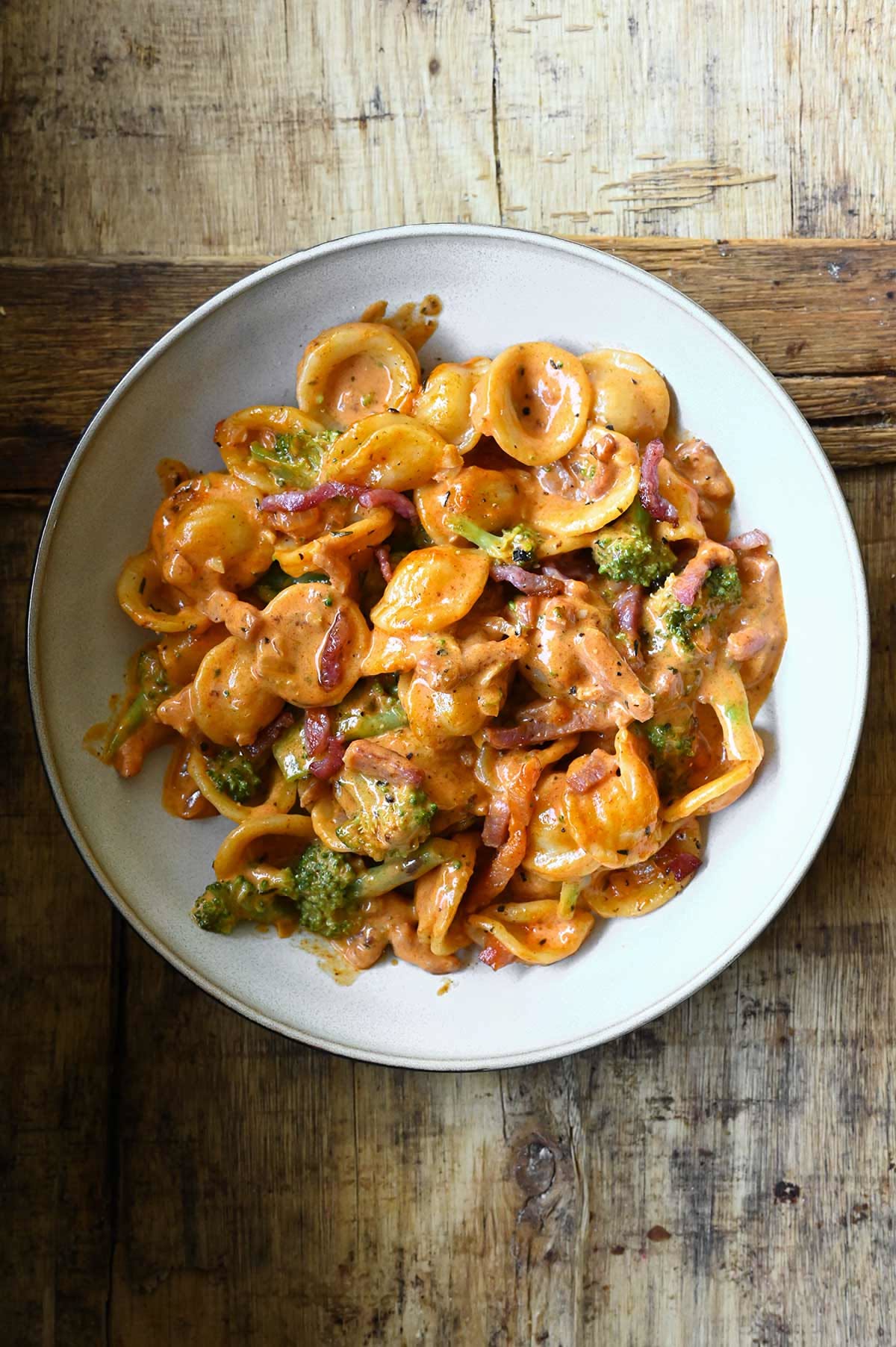
Spicy Orecchiette Pasta
Spicy Orecchiette Pasta delivers chewy little pasta ears in a fiery garlic-chili tomato sauce that clings to every cup for a bold 30-minute dinner.
🧂 Ingredients
- 1 lb (454 g) dried orecchiette pasta
- 1/3 cup (80 ml) extra-virgin olive oil
- 6 garlic cloves, thinly sliced
- 1 1/2 tsp crushed red pepper flakes
- 2 tbsp Calabrian chili paste
- 1 can (28 oz / 794 g) whole peeled San Marzano tomatoes, crushed by hand
- 1/2 cup (50 g) grated Pecorino Romano
- 3 tbsp cold unsalted butter, cut into pieces
- 1/2 cup (20 g) fresh flat-leaf parsley, chopped
- Kosher salt and freshly cracked black pepper, to taste
📋 Instructions
- 1Boil the pasta — Bring 5 quarts of water to a rolling boil, add 1 tablespoon kosher salt, and cook the orecchiette for 9 minutes, until just shy of al dente. It should still have a firm, chalky center when you bite one, like a slightly undercooked grain of rice. Reserve 1 cup of the cooking water, then drain.
- 2Warm the oil — Set a wide skillet over medium heat (about 325 F / 165 C) and add the olive oil. Wait 60 to 90 seconds until the oil shimmers and a single pepper flake sizzles gently on contact, but does not pop violently.
- 3Bloom the chili — Add the crushed red pepper flakes and Calabrian chili paste and stir constantly for 45 seconds. The oil should turn deep red and smell toasted and fragrant; if it smells acrid, lower the heat right away.
- 4Soften the garlic — Add the sliced garlic and cook for 60 to 90 seconds, stirring, until the edges are pale gold and translucent, never dark brown. This is the flavor base, so pull the pan off the heat if the garlic starts to color too fast.
- 5Build the sauce — Pour in the hand-crushed tomatoes with their juices, season with 1/2 teaspoon salt and several grinds of black pepper, and simmer over medium-low heat (about 300 F / 150 C) for 12 to 15 minutes. The sauce is ready when it has thickened, the bubbling edges look glossy, and a spoon dragged across the pan leaves a trail that holds for a second.
- 6Emulsify with butter — Reduce the heat to low (about 250 F / 120 C), add the cold butter pieces, and swirl the pan until they melt into the sauce, about 1 minute. The sauce should look shiny and slightly creamy rather than greasy.
- 7Toss pasta and sauce — Add the drained orecchiette and 1/2 cup of the reserved pasta water to the skillet and toss over medium-low heat for 60 to 90 seconds. The sauce should thicken enough to coat the back of a spoon and just barely slide off the pasta when you lift a piece.
- 8Finish and serve — Turn off the heat, stir in the Pecorino Romano and most of the parsley, and loosen with more pasta water if it looks tight. Taste, adjust salt and pepper, then plate with the remaining parsley and an extra drizzle of olive oil.

Ethan writes about technology and digital privacy, focusing on how to protect your online identity without being a tech expert. He translates complex security concepts into everyday language and practical steps.