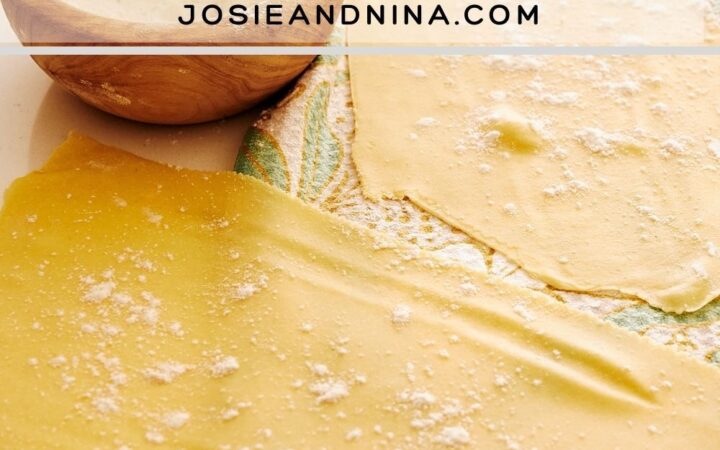
Lasagna Pasta Dough Recipe is the quiet hero behind every great baked lasagna: it is simply a firm egg dough rolled thin enough to see your hand through, then cut into sheets that hold their shape under sauce, cheese, and heat. Think of it like the foundation of a house – if the slab is weak, everything above it sags, and if your sheets are too soft or too thick, your beautiful layers collapse into soup.
Advertisements1
The dough itself is not difficult, but it is honest work. You need only three ingredients and about 50 minutes, most of which is resting time while the gluten relaxes. Gluten is the stretchy protein network that forms when flour meets water and eggs; resting lets it loosen so the sheets roll thin instead of springing back like a rubber band.
This recipe yields roughly 1 pound 2 ounces (510 g) of dough, enough for a 9×13-inch lasagna with a few spare sheets for patching. I will walk you through every temperature, every rest, and every sensory cue so you know exactly when the dough is ready – no guessing, no wasted batches, and no mystery about food safety along the way. Stay curious, stay safe.
Why You'll Love This Recipe
About the Ingredients
2 1/4 cups (300 g) all-purpose flour, plus extra for dusting
All-purpose flour has enough protein (about 10-11%) to build structure without toughness. If you want a springier bite, swap in 00 flour or bread flour gram for gram; avoid cake flour, which is too weak and will tear.
3 large eggs (about 150 g without shells), at room temperature
Room-temperature eggs blend into the flour far more evenly than cold ones. If you only have cold eggs, place them in a bowl of warm tap water for 5 minutes; the shells are porous, so skip this if any egg is cracked.
1 large egg yolk (about 18 g)
The extra yolk adds richness and a golden color. Save the leftover white in a sealed container in the fridge for up to 4 days and use it for an egg wash on your lasagna top.
1 tablespoon (15 ml) extra-virgin olive oil
Olive oil keeps the dough supple and easier to roll. Any neutral oil works as a substitute, but avoid butter, which adds water and makes the dough sticky.
1/2 teaspoon (3 g) fine sea salt
Salt seasons the pasta from the inside rather than only in the water. Fine sea salt dissolves quickly; if you use kosher salt, check the box – Diamond Crystal needs about double the volume of Morton.
1/2 cup (60 g) fine semolina flour, for dusting
Semolina is coarsely ground durum wheat that resists absorbing moisture, so sheets do not stick together. If you cannot find it, use cornstarch or extra all-purpose flour, though the sheets will be slightly more absorbent.
Tips & Tricks
Weigh Your Flour
Scooping flour from the bag can pack in 20% extra, which makes a dry, crumbly dough – use a kitchen scale or spoon-and-level the flour into the cup.
Let It Rest, Really
If the dough springs back while rolling, it is not ready; cover it and wait another 10 minutes. Fighting the gluten only produces thick, uneven sheets.
Keep Sheets Covered
Fresh pasta dries out in minutes and cracks when folded. Lay finished sheets on a floured towel under a second towel or plastic wrap as you work.
Cook Fresh Sheets Briefly
Fresh lasagna sheets need only 60-90 seconds in boiling water, or none at all if your sauce is wet – overcooking turns them to paste.
Pro Tips
Step-by-Step Instructions
1. Mound the Flour
Pour the flour and salt onto a clean counter or into a wide bowl and whisk them together, then make a deep well in the center like a crater. The well walls hold the eggs in place so they do not run across your counter.
2. Add the Eggs
Crack the eggs and yolk into the well, add the olive oil, and beat the eggs gently with a fork, gradually pulling a little flour in from the inner rim. Keep the walls intact until the eggs are fully blended – this is the messiest step if you rush it.
3. Bring It Together
Keep mixing with the fork until a shaggy, sticky mass forms, then switch to your hands and knead in the bowl or on the counter for 8-10 minutes. The dough is ready when it is smooth, slightly tacky, and springs back slowly when you press it with a finger.
4. Rest the Dough
Wrap the ball tightly in plastic wrap and let it rest at room temperature for 30 minutes. This rest is not optional – it relaxes the gluten so the sheets roll thin instead of snapping back.
5. Flatten and Flour
Cut the dough into 4 equal pieces, keep 3 covered, and press the first piece into a flat disc about 1/2 inch (1.3 cm) thick. Dust both sides generously with semolina so nothing sticks to the rollers or pin.
6. Roll the Sheets
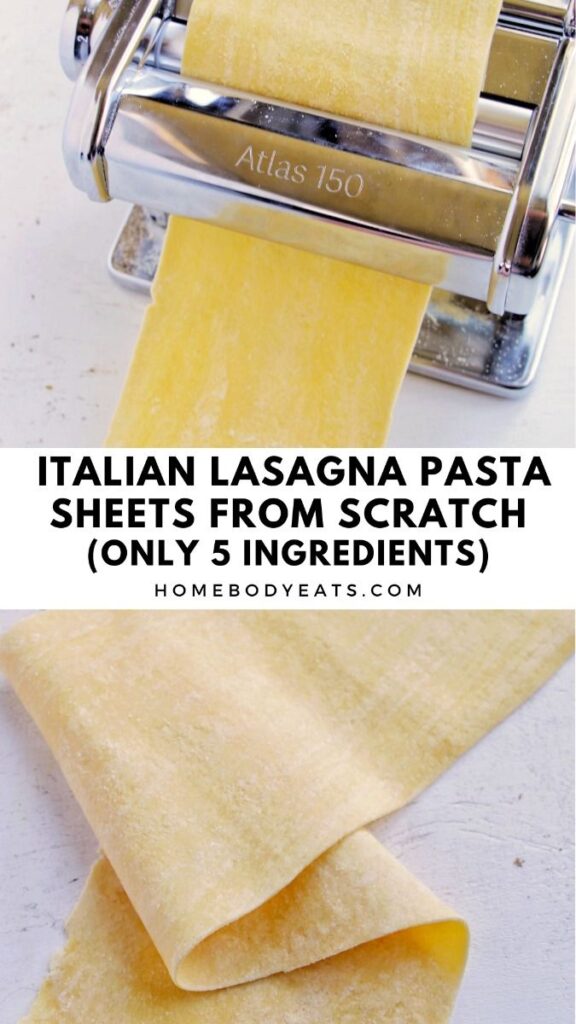
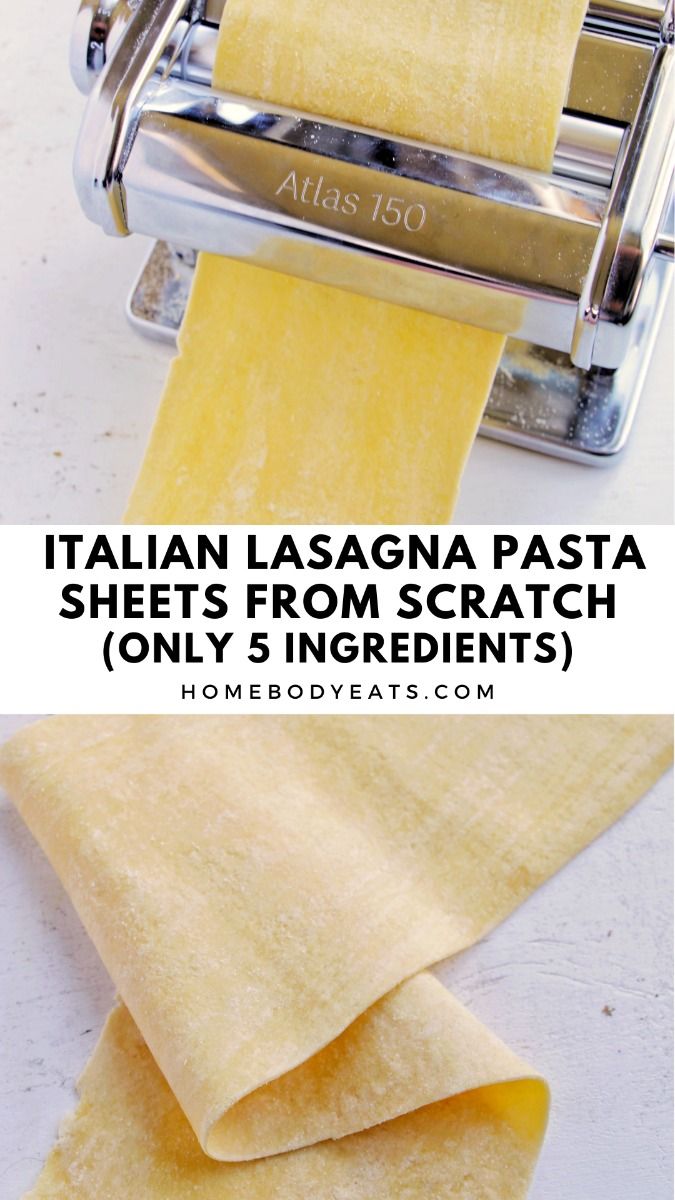
Roll the disc through a pasta machine at the widest setting, then fold it in thirds and pass it through again; repeat twice, then narrow the setting one notch at a time until the sheet is about 1/16 inch (1.5 mm) thick – thin enough to see the shadow of your hand through it. If rolling by hand, use a long rolling pin and stretch outward from the center.
7. Cut and Dry
Lay each sheet on a semolina-dusted towel and trim it to fit your baking dish, about 13 inches (33 cm) long and 4-5 inches (10-13 cm) wide. Let the sheets air-dry for 10-15 minutes until they feel leathery but still pliable; they should bend without cracking.
8. Blanch Before Baking
If using immediately, boil the sheets in well-salted water at 212 F (100 C) for 60-90 seconds, then lift them out with tongs into an ice bath for 30 seconds and pat dry. This par-cooks them so the lasagna bakes evenly at 375 F (190 C) for 35-40 minutes with bubbling edges and a golden top.
Delicious Variations
Spinach Lasagna Sheets
Blend 4 ounces (115 g) of thawed, squeezed-dry frozen spinach into the eggs before mixing; the sheets turn deep green and add a subtle vegetal note.
Semolina-Forward Dough
Replace half the all-purpose flour with fine semolina flour for a firmer, more toothsome sheet that stands up to heavy meat sauces.
Herb-Infused Sheets
Knead 2 tablespoons of finely chopped fresh basil or parsley into the dough at the end for speckled sheets that perfume the whole lasagna.
How to Store Lasagna Pasta Dough Recipe
Refrigerator
Wrap unused sheets in plastic wrap or layer them between parchment in an airtight container and refrigerate for up to 3 days. Dust with semolina between layers so they do not fuse together.
Freezer
Lay sheets flat on a parchment-lined baking sheet, freeze for 1 hour until rigid, then stack them in a freezer bag with parchment between each sheet. They keep for up to 2 months; thaw in the fridge overnight before using.
Reheating
Fresh pasta sheets are used raw or par-boiled in the lasagna, so there is nothing to reheat on their own. If you have leftover assembled lasagna, reheat it covered at 350 F (175 C) for 20-25 minutes until the center reaches 165 F (74 C).
Frequently Asked Questions
Q: Can I make lasagna pasta dough without a pasta machine?
Yes, you can roll the dough by hand with a long rolling pin, though it takes patience and a strong arm. Work on a lightly floured surface, roll from the center outward, and rotate the sheet a quarter turn after every few passes until it is thin enough to see your hand through. The sheets will be slightly thicker than machine-rolled ones, so par-boil them for 2 minutes instead of 90 seconds.
Q: How do I know if my pasta dough is too dry or too wet?
Too dry feels crumbly and cracks when you press it, while too wet feels sticky and coats your fingers like paste. Sprinkle water in 1-teaspoon increments for dry dough, or dust in 1-tablespoon increments of flour for wet dough, kneading for 30 seconds between additions. Small corrections are safer than big ones because the dough keeps absorbing moisture as it rests.
Q: Do I need to boil fresh lasagna sheets before baking?
Not always – if your sauce is thin and watery, you can layer fresh sheets raw and they will cook in the oven. If your sauce is thick or you are using a lot of cheese, par-boil the sheets for 60-90 seconds so the lasagna bakes evenly instead of drying out at the edges. Raw sheets also absorb more sauce, so add an extra 1/2 cup of sauce if you skip boiling.
Q: How long does fresh lasagna pasta dough last in the fridge?
Wrapped dough lasts up to 3 days in the refrigerator, and rolled sheets last about the same when stored between parchment. After that, the dough darkens and develops a stale flour smell, which is your cue to toss it. For longer storage, freeze the sheets flat for up to 2 months.
Q: Why did my pasta dough tear when I rolled it?
Tearing usually means the dough was not rested long enough or the sheet was rolled too thin too quickly. Gluten needs at least 30 minutes to relax, and each pass through the machine should narrow the setting by only one notch. If a sheet tears, fold it back into a ball, rest it for 10 minutes, and start again from the widest setting.
Roll up your sleeves, flour your counter, and make this lasagna pasta dough once – you will never go back to boxed sheets. Start with the 30-minute rest, trust the sensory cues, and remember that a slightly imperfect sheet still bakes into something wonderful. Stay curious, stay safe.
Lasagna Pasta Dough Recipe
Lasagna Pasta Dough Recipe makes silky from-scratch sheets with just flour, eggs, and olive oil, so your baked lasagna holds its layers without turning mushy.
🧂 Ingredients
- 2 1/4 cups (300 g) all-purpose flour, plus extra for dusting
- 3 large eggs (about 150 g without shells), at room temperature
- 1 large egg yolk (about 18 g)
- 1 tablespoon (15 ml) extra-virgin olive oil
- 1/2 teaspoon (3 g) fine sea salt
- 1/2 cup (60 g) fine semolina flour, for dusting
📋 Instructions
- 1Mound the Flour — Pour the flour and salt onto a clean counter or into a wide bowl and whisk them together, then make a deep well in the center like a crater. The well walls hold the eggs in place so they do not run across your counter.
- 2Add the Eggs — Crack the eggs and yolk into the well, add the olive oil, and beat the eggs gently with a fork, gradually pulling a little flour in from the inner rim. Keep the walls intact until the eggs are fully blended – this is the messiest step if you rush it.
- 3Bring It Together — Keep mixing with the fork until a shaggy, sticky mass forms, then switch to your hands and knead in the bowl or on the counter for 8-10 minutes. The dough is ready when it is smooth, slightly tacky, and springs back slowly when you press it with a finger.
- 4Rest the Dough — Wrap the ball tightly in plastic wrap and let it rest at room temperature for 30 minutes. This rest is not optional – it relaxes the gluten so the sheets roll thin instead of snapping back.
- 5Flatten and Flour — Cut the dough into 4 equal pieces, keep 3 covered, and press the first piece into a flat disc about 1/2 inch (1.3 cm) thick. Dust both sides generously with semolina so nothing sticks to the rollers or pin.
- 6Roll the Sheets — Roll the disc through a pasta machine at the widest setting, then fold it in thirds and pass it through again; repeat twice, then narrow the setting one notch at a time until the sheet is about 1/16 inch (1.5 mm) thick – thin enough to see the shadow of your hand through it. If rolling by hand, use a long rolling pin and stretch outward from the center.
- 7Cut and Dry — Lay each sheet on a semolina-dusted towel and trim it to fit your baking dish, about 13 inches (33 cm) long and 4-5 inches (10-13 cm) wide. Let the sheets air-dry for 10-15 minutes until they feel leathery but still pliable; they should bend without cracking.
- 8Blanch Before Baking — If using immediately, boil the sheets in well-salted water at 212 F (100 C) for 60-90 seconds, then lift them out with tongs into an ice bath for 30 seconds and pat dry. This par-cooks them so the lasagna bakes evenly at 375 F (190 C) for 35-40 minutes with bubbling edges and a golden top.

Ethan writes about technology and digital privacy, focusing on how to protect your online identity without being a tech expert. He translates complex security concepts into everyday language and practical steps.