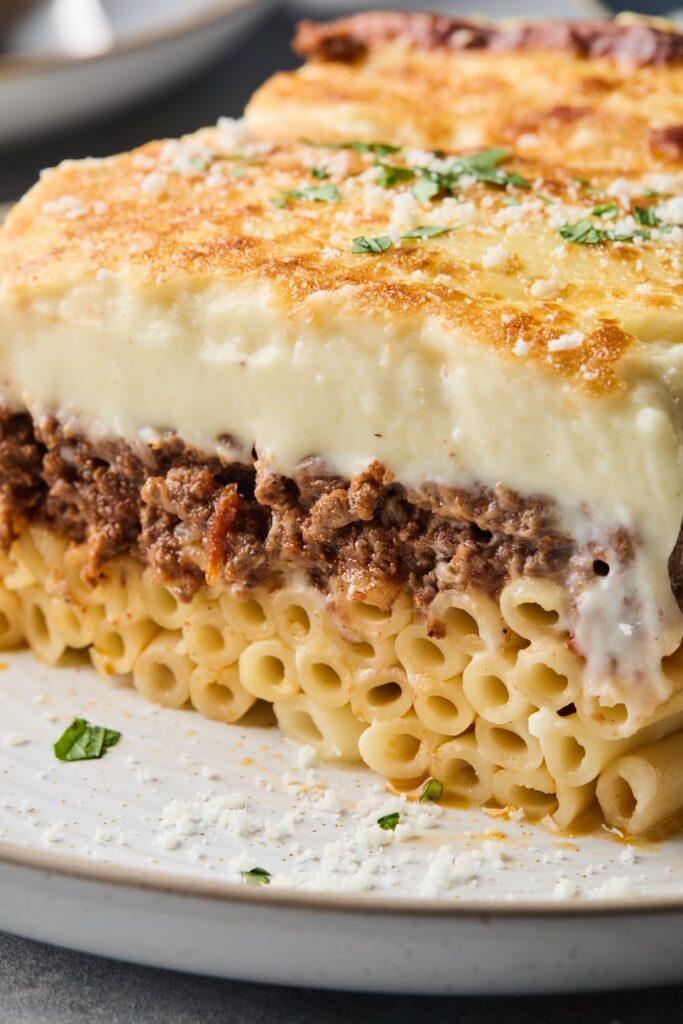
If you have ever pulled a tray of moussaka from the oven and wondered why the top tastes like a cloud instead of a cream sauce, you have met Greek bechamel. It is not the thin white sauce you whisk for mac and cheese. It is thicker, richer, and just a little bit stubborn, and it is the reason Greek grandmas guard their recipe like a passport.
Advertisements1
I learned this sauce the loud way, standing in my yiayia's tiny kitchen while she tapped a wooden spoon against the pot and said, 'Listen. When it pulls away, it is ready.' I burned two batches before I understood her. Now I make it on Sunday afternoons while my kids argue over the last piece of bread, and somehow the kitchen always smells like a hug.
This version uses a cornstarch-and-flour blend for that glossy, sliceable set, plus a hit of nutmeg and kefalotyri. It is forgiving, it freezes beautifully, and it will make you feel like you actually know what you are doing in the kitchen. Spoiler: you do.
Why You'll Love This Recipe
About the Ingredients
1/2 cup (113g) unsalted butter
European-style butter gives a richer flavor, but regular unsalted works perfectly. If you only have salted butter, cut the added salt in half and taste before seasoning.
3/4 cup (94g) all-purpose flour
Spoon and level it, or your sauce will taste like paste. For a gluten-free version, swap in an equal weight of cup-for-cup gluten-free blend plus 1 extra tablespoon of cornstarch.
4 cups (960ml) whole milk, warmed
Warm milk is the secret to a lump-free sauce, so heat it in the microwave for 90 seconds before you start. 2% works, but the sauce will be noticeably thinner; oat milk is the best dairy-free stand-in.
2 tablespoons cornstarch
This is what makes Greek bechamel sliceable instead of pourable. Whisk it into the cold milk first, never into a hot pot, or you will get instant clumps.
3 large eggs, room temperature
Room temperature eggs temper without scrambling, so pull them out 30 minutes ahead. If you forget, rest them in a bowl of warm tap water for 10 minutes.
1 1/4 cups (100g) grated kefalotyri or Parmesan
Kefalotyri is salty and sharp, the classic Greek pick; Parmesan or aged pecorino are the closest easy swaps. Buy a block and grate it yourself, since pre-shredded cheese is coated in starch and melts grainy.
1/4 teaspoon freshly grated nutmeg
Fresh nutmeg is a completely different spice than the pre-ground jar, so grate it on a microplane over the pot. If you only have ground, use a scant 1/8 teaspoon so it does not overpower.
1 1/4 teaspoons fine sea salt
Fine sea salt dissolves evenly; kosher salt needs about 1 1/2 teaspoons to match. Add it in stages, since your cheese brings its own saltiness.
1/2 teaspoon white pepper
White pepper keeps the sauce pristine white, which matters for that golden moussaka top. Black pepper tastes fine but leaves little dark flecks throughout.
1/4 teaspoon ground cinnamon, optional
A pinch of cinnamon is traditional in some regions and adds a warm background note. Skip it if you are using the sauce for a sweeter dish.
Tips & Tricks
Warm Your Milk First
Cold milk hitting a hot roux seizes into lumps, so warm it for 90 seconds before whisking it in. This one step prevents 90 percent of bechamel disasters.
Temper the Eggs Slowly
Ladle a cup of hot sauce into the beaten eggs while whisking constantly, then pour it all back into the pot. Dumping eggs straight in gives you sweet scrambled eggs in cream sauce.
Stir the Corners
A flat-bottomed wooden spoon or silicone spatula reaches the edges of the pot where sauce likes to scorch. Whisk in a figure-eight motion and scrape the sides every few strokes.
Season at the End
Cheese and salt concentrate as the sauce thickens, so taste after the cheese melts and adjust from there. Over-salted bechamel cannot be fixed, but under-salted can.
Pro Tips
Step-by-Step Instructions
1. Melt the Butter
Melt 1/2 cup butter in a heavy saucepan over medium heat, about 2 minutes, until it foams and smells nutty but has not browned. If it starts crackling and turning tan, pull it off the heat for 30 seconds to cool.
2. Whisk the Roux
Whisk in the flour and cook 2 to 3 minutes, stirring constantly, at medium heat (about 300F/150C at the surface) until the paste smells toasty and pulls away from the sides of the pan. This cooks out the raw flour taste that ruins rushed sauces.
3. Add the Milk
Pour in the warmed milk in a steady stream while whisking hard, then add the cornstarch slurry. The mixture will look thin at first; keep whisking 6 to 8 minutes until it thickens enough to coat the back of a spoon and the first lazy bubbles break at the edges.
4. Simmer and Season
Lower the heat and simmer gently 5 minutes at about 200F (93C), stirring often, until the sauce is glossy and a finger swipe across the spoon leaves a clean trail. Stir in the salt, white pepper, nutmeg, and cinnamon if using.
5. Melt the Cheese
Off the heat, stir in the grated kefalotyri in three handfuls until each addition disappears, about 1 minute total. The residual heat is enough; boiling cheese makes it stringy and oily.
6. Temper the Eggs
Whisk the eggs in a bowl, then slowly stream in 1 cup of the hot sauce while whisking constantly. Pour the egg mixture back into the pot and cook over low heat 2 to 3 minutes, stirring, until it reaches 170F (77C) and thickens to a pudding-like set.
7. Finish and Rest
Cook 1 more minute until the sauce mounds on the spoon and a wooden spoon drawn through leaves a clean channel. Cover the surface with plastic wrap and rest 10 minutes before using so it sets to the perfect spreading consistency.
Delicious Variations
Dairy-Free Greek Bechamel
Use oat milk, plant butter, and nutritional yeast in place of the cheese for a vegan version that still bakes golden.
Lighter Yogurt Bechamel
Swap 1 cup of the milk for full-fat Greek yogurt, whisked in off the heat, for a tangier, protein-rich topping.
Smoky Eggplant Bechamel
Add 1/2 teaspoon smoked paprika and a tablespoon of tomato paste with the roux for a deeper, richer sauce that pairs beautifully with moussaka.
How to Store Greek Bechamel Sauce
Refrigerator
Cool to room temperature within 1 hour, then store in an airtight container with plastic wrap pressed to the surface for up to 3 days. Stir in a splash of warm milk when reheating.
Freezer
Freeze in a zip-top bag with the air pressed out for up to 3 months. Thaw overnight in the fridge; the sauce may look separated but whisks back together over low heat.
Reheating
Reheat gently over low heat with 1 to 2 tablespoons of milk, whisking constantly for 3 to 4 minutes until smooth. Never microwave on high, or the eggs will curdle.
Frequently Asked Questions
Q: What is the difference between Greek bechamel and regular bechamel?
Greek bechamel is thicker and richer because it adds eggs, cornstarch, and cheese, which lets it set firm enough to slice. Classic French bechamel is a looser milk-and-roux sauce with no eggs. That firm set is exactly what holds moussaka and pastitsio together.
Q: Why is my bechamel lumpy?
Lumps almost always come from adding cold milk to a hot roux too fast. Warm your milk first and add it in a slow stream while whisking constantly. If lumps still form, pour the sauce through a fine-mesh strainer and whisk it back over low heat.
Q: Can I make Greek bechamel ahead of time?
Yes, it keeps beautifully in the fridge for up to 3 days if you press plastic wrap directly onto the surface. Let it cool completely before covering, then loosen it with a splash of milk when you reheat. It also freezes for up to 3 months.
Q: How do I know when the bechamel is thick enough?
It is ready when it coats the back of a spoon and a finger swipe through the coating leaves a clean, sharp trail. It should mound slightly rather than run off in a thin stream. Remember it thickens more as it cools.
Q: Can I use this sauce for pastitsio and moussaka?
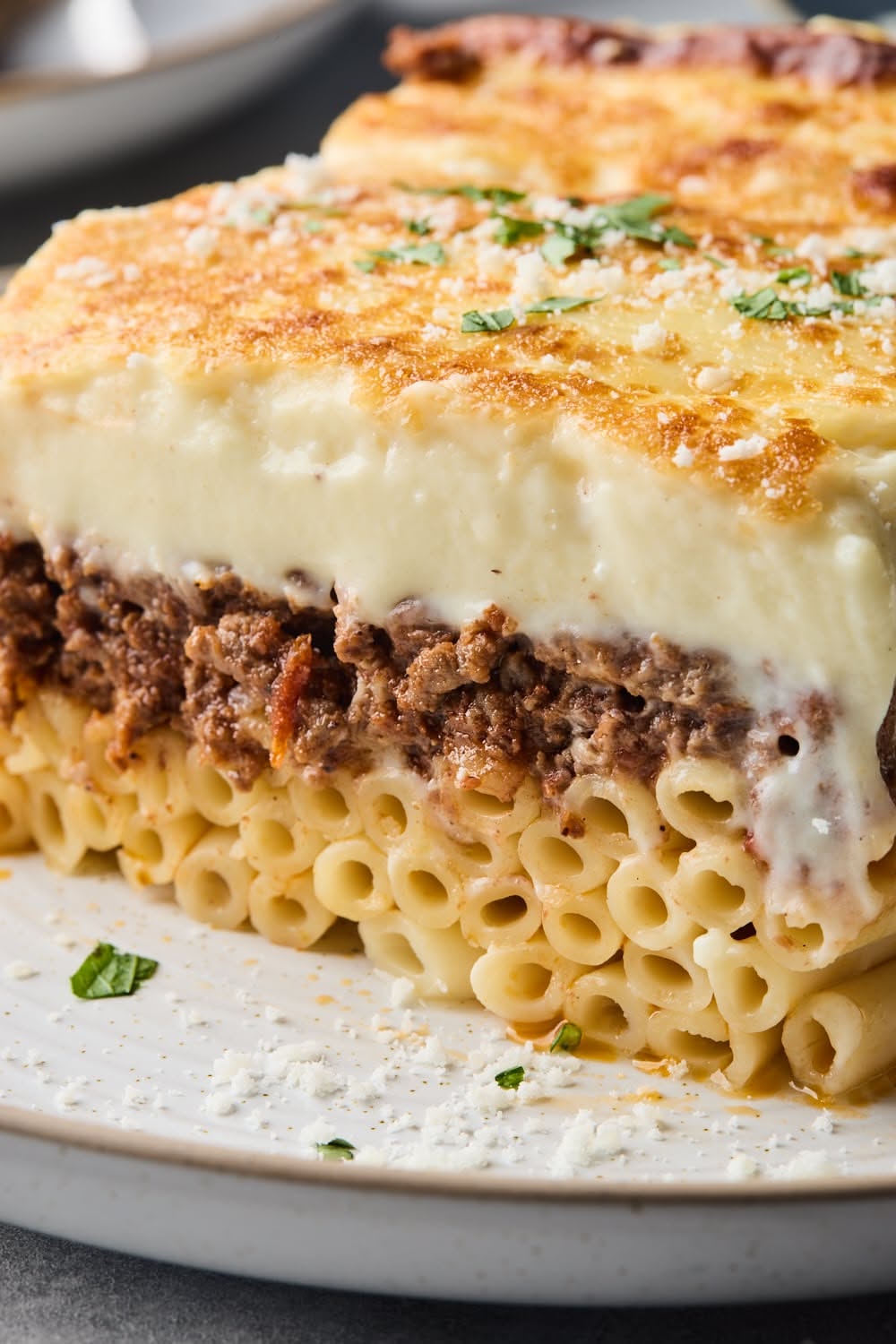
Absolutely, this is the traditional topping for both. Spread it over the assembled dish while still warm and bake at 350F (175C) for 35 to 45 minutes until the top is golden and the center is set. It also works as a topping for baked vegetables or creamed spinach.
I would love to know how your bechamel turns out, so drop a comment and tell me what you topped it with. If you are nervous about the tempering step, you are not alone, and I am happy to walk you through it. Snap a photo of that golden top and tag me, because seeing your trays come out bubbling makes my whole week. Parenting is a journey, not a perfection.
Greek Bechamel Sauce
Greek Bechamel Sauce is the silky, nutmeg-kissed custard that turns moussaka and pastitsio into golden, bubbling comfort food your family will beg for.
🧂 Ingredients
- 1/2 cup (113g) unsalted butter
- 3/4 cup (94g) all-purpose flour
- 4 cups (960ml) whole milk, warmed
- 2 tablespoons cornstarch
- 3 large eggs, room temperature
- 1 1/4 cups (100g) grated kefalotyri or Parmesan
- 1/4 teaspoon freshly grated nutmeg
- 1 1/4 teaspoons fine sea salt
- 1/2 teaspoon white pepper
- 1/4 teaspoon ground cinnamon, optional
📋 Instructions
- 1Melt the Butter — Melt 1/2 cup butter in a heavy saucepan over medium heat, about 2 minutes, until it foams and smells nutty but has not browned. If it starts crackling and turning tan, pull it off the heat for 30 seconds to cool.
- 2Whisk the Roux — Whisk in the flour and cook 2 to 3 minutes, stirring constantly, at medium heat (about 300F/150C at the surface) until the paste smells toasty and pulls away from the sides of the pan. This cooks out the raw flour taste that ruins rushed sauces.
- 3Add the Milk — Pour in the warmed milk in a steady stream while whisking hard, then add the cornstarch slurry. The mixture will look thin at first; keep whisking 6 to 8 minutes until it thickens enough to coat the back of a spoon and the first lazy bubbles break at the edges.
- 4Simmer and Season — Lower the heat and simmer gently 5 minutes at about 200F (93C), stirring often, until the sauce is glossy and a finger swipe across the spoon leaves a clean trail. Stir in the salt, white pepper, nutmeg, and cinnamon if using.
- 5Melt the Cheese — Off the heat, stir in the grated kefalotyri in three handfuls until each addition disappears, about 1 minute total. The residual heat is enough; boiling cheese makes it stringy and oily.
- 6Temper the Eggs — Whisk the eggs in a bowl, then slowly stream in 1 cup of the hot sauce while whisking constantly. Pour the egg mixture back into the pot and cook over low heat 2 to 3 minutes, stirring, until it reaches 170F (77C) and thickens to a pudding-like set.
- 7Finish and Rest — Cook 1 more minute until the sauce mounds on the spoon and a wooden spoon drawn through leaves a clean channel. Cover the surface with plastic wrap and rest 10 minutes before using so it sets to the perfect spreading consistency.

Aisha writes about parenting and child development, sharing insights from her own journey raising two kids. She offers realistic advice on navigating the ups and downs of family life, from tantrums to teen years.