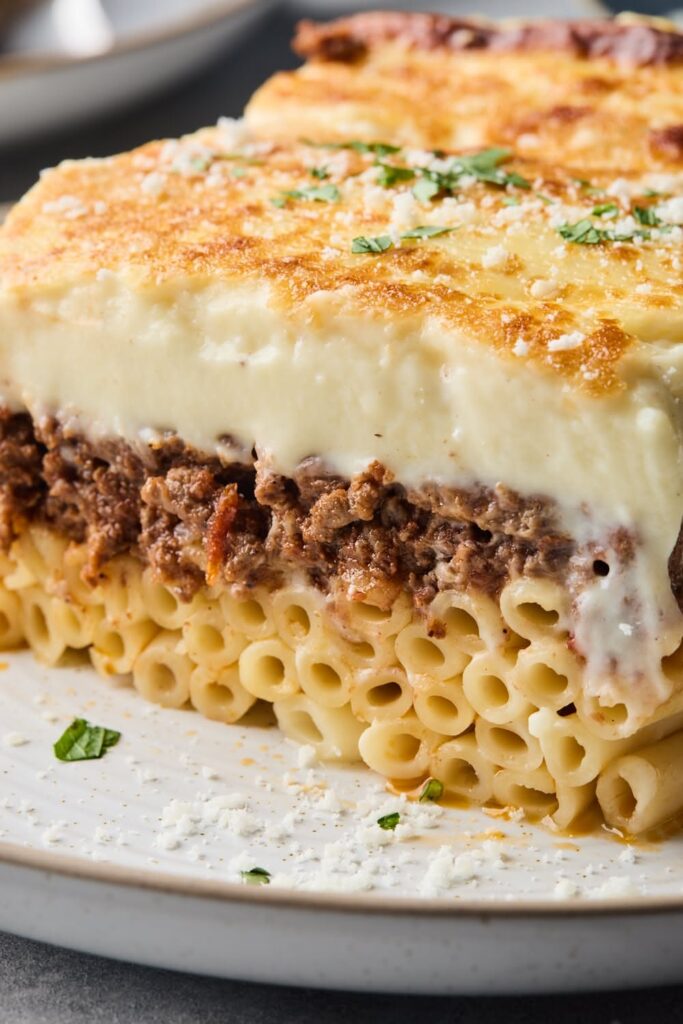
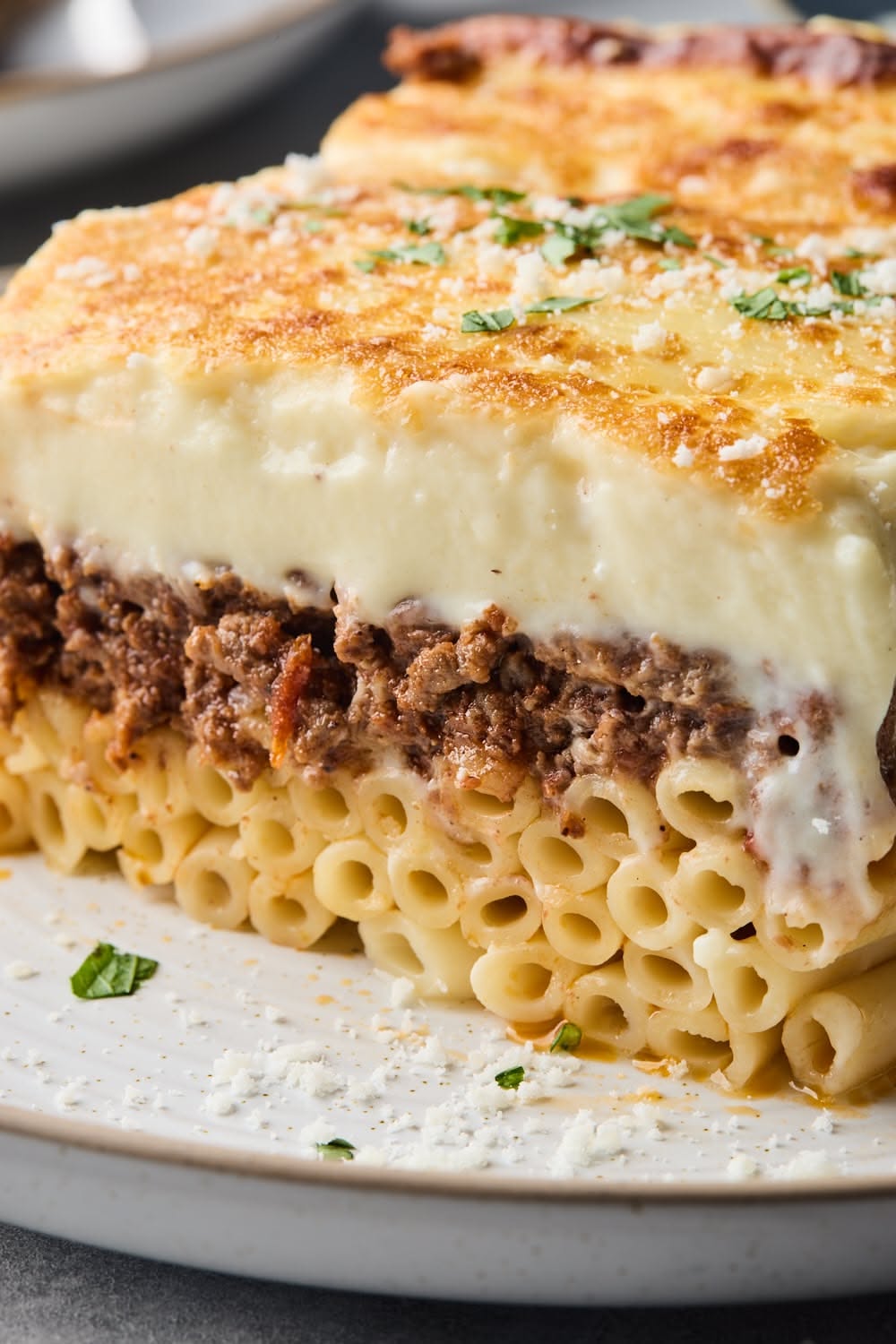
The first time I dragged my spoon through a bubbling tray of pastitsio in a tiny taverna off Athinas Street in Athens, I understood: the pasta is just the stage, and Greek bechamel is the star. Unlike the French version, this one is thickened with a cornstarch-and-egg yolk slurry, which turns it into something closer to a savory custard – glossy, sliceable, and almost custardy when it sets.
Advertisements1
Forget what you know about temperamental roux. Yiayias across Greece build this sauce in one pot, whisking cold milk into hot butter-flour paste, then raining in a cornstarch slurry that keeps everything lump-free. The reward is a topping that bakes to a burnished gold dome, puffs slightly at the edges, and cuts into clean, proud squares.
I learned it in a cramped kitchen in Thessaloniki where the oven door didn't quite close and the neighbor kept shouting the time from her balcony. No fancy equipment, no stress – just patience, a whisk, and a heavy hand with the nutmeg. Budget tip: whole milk, butter, and eggs are the whole show, so buy the best nutmeg you can afford and grate it fresh. Hasta la próxima!
Why You'll Love This Recipe
About the Ingredients
6 tablespoons (85g) unsalted butter
European-style butter with higher fat gives a richer base. In a pinch, salted butter works – just cut the added salt to a pinch.
3/4 cup (94g) all-purpose flour
Standard AP flour is ideal; bread flour makes the paste too elastic. For gluten-free, use a 1:1 blend plus 1 extra tablespoon.
4 cups (960ml) whole milk, divided
Whole milk is non-negotiable for body; 2% works but thins the custard. Buying tip: check the sell-by date and grab the freshest carton, since you are scalding it.
1/4 cup (30g) cornstarch
This is the Greek secret for a sliceable, custard-like set. Arrowroot or potato starch can substitute, but use only 3 tablespoons.
3 large egg yolks, room temperature
Room-temperature yolks blend without scrambling. No eggs? Whisk in 2 extra tablespoons cornstarch and 2 tablespoons olive oil instead.
1 teaspoon fine sea salt
Fine sea salt dissolves instantly in hot milk. Kosher salt works – use 1 1/4 teaspoons since the flakes are larger.
1/4 teaspoon freshly grated nutmeg
Grate whole nutmeg on a microplane; pre-ground loses its oils fast. Mace is the closest substitute, with a slightly brighter aroma.
1/8 teaspoon ground white pepper
White pepper keeps the sauce pristine white. Black pepper is fine if you don't mind the flecks.
1/2 cup (50g) grated Kefalotyri or Parmesan
Kefalotyri is the traditional Greek choice, salty and sharp. Pecorino Romano or aged Parmesan are excellent swaps.
Tips & Tricks
Whisk Cold Into Hot
Add cold milk gradually to the hot roux – this is the classic Greek method that prevents lumps without straining.
Slurry Before Yolks
Whisk the cornstarch into the cold milk first, then temper the yolks into that mixture before it hits the pot.
Grate Nutmeg Fresh
Whole nutmeg lasts years and transforms the sauce; a pinch of pre-ground tastes like dust by comparison.
Bake Until It Speaks
The sauce is ready when the top is deep golden and the edges bubble audibly – that sound means the custard has set.
Pro Tips
Step-by-Step Instructions
1. Melt the butter
Melt 6 tablespoons (85g) butter in a heavy saucepan over medium heat (about 300F/150C) for 2 minutes, until it foams and smells nutty but has not browned.
2. Cook the roux
Whisk in 3/4 cup (94g) flour and cook, stirring constantly, for 3 to 4 minutes at medium-low (250-275F/120-135C) until the paste turns pale gold and smells like toasted bread – this cooks out the raw flour taste.
3. Build the slurry
In a bowl, whisk 1 cup (240ml) cold milk with the 1/4 cup (30g) cornstarch until completely smooth, then whisk in the 3 egg yolks. Set aside.
4. Add hot milk slowly
Pour the remaining 3 cups (720ml) milk into the roux in a thin stream, whisking constantly, and bring to a gentle simmer at 200F/93C for 3 to 4 minutes until it thickens enough to coat a spoon.
5. Temper in the slurry
Ladle 1 cup of the hot sauce into the cornstarch-yolk mixture while whisking, then pour it all back into the pot. Cook at 190F/88C for 2 to 3 minutes, whisking, until glossy and pudding-thick.
6. Season and cheese
Off the heat, stir in 1 teaspoon salt, 1/4 teaspoon nutmeg, 1/8 teaspoon white pepper, and 1/2 cup (50g) grated Kefalotyri until melted and fragrant.
7. Cool and use
Press plastic wrap directly onto the surface and cool 10 minutes before spreading over pastitsio or moussaka. It should be thick, pourable, and ribbony.
8. Bake to gold
Spread over your dish and bake at 375F/190C for 30 to 35 minutes, until the top is deep golden brown and the edges bubble steadily – an instant-read thermometer in the center should read 175F/79C.
Delicious Variations
Lighter Olive Oil Version
Swap the butter for 1/2 cup extra-virgin olive oil for a Lenten-friendly sauce that still sets beautifully.
Cheesy Kasseri Upgrade
Fold in 1/2 cup shredded Kasseri with the Kefalotyri for a stretchier, sharper topping.
Smoky Paprika Twist
Add 1/2 teaspoon smoked paprika with the nutmeg for a warm, sunset-colored sauce that pairs with lamb moussaka.
How to Store Greek Bechamel Sauce
Refrigerator
Store in an airtight container with plastic wrap pressed to the surface for up to 3 days; whisk in a splash of warm milk to loosen before using.
Freezer
Freeze in a zip-top bag, flattened, for up to 2 months; thaw overnight in the refrigerator, then reheat gently since egg-based sauces can separate.
Reheating
Reheat in a saucepan over low heat (150F/65C), whisking constantly, or microwave in 30-second bursts, stirring between each, until smooth and hot.
Frequently Asked Questions
Q: What makes Greek bechamel different from French bechamel?
Greek bechamel uses cornstarch and egg yolks, which makes it thicker, custard-like, and sliceable rather than pourable. French bechamel is a simple milk-and-roux sauce with no eggs, so it stays looser and creamier. That sturdier set is exactly why pastitsio holds its shape when sliced.
Q: Why is my bechamel lumpy?
Lumps almost always come from adding hot liquid to the roux too fast or skipping the slurry step. Whisk cold milk into the cornstarch first, add the hot milk to the roux in a thin stream, and keep the whisk moving in the corners of the pan. If lumps appear anyway, strain the sauce once and whisk it smooth.
Q: Can I make Greek bechamel ahead of time?
Yes, it keeps beautifully for up to 3 days in the refrigerator with plastic wrap pressed directly onto the surface. Cool it completely before covering, then gently reheat with a splash of milk before spreading it over your pastitsio or moussaka. It also freezes for up to 2 months.
Q: How do I know when the bechamel is thick enough?
It is ready when it coats the back of a spoon and a finger drawn through the coating leaves a clean line that holds. At that point it should be glossy, ribbony, and smell of nutmeg and toasted flour. If it still drips off in a thin stream, simmer 1 to 2 more minutes at 190F/88C.
Q: Can I use low-fat milk for Greek bechamel?
You can, but 2% or skim milk gives a noticeably thinner, less luxurious custard. Whole milk is traditional because its fat helps the sauce set smoothly and taste rich. If you only have low-fat milk, add an extra tablespoon of butter to compensate.
Grab a whole nutmeg and a heavy saucepan, and build this sauce tonight – then tell me whether your family fights over the crispy corner piece like mine does. Snap a photo of your golden pastitsio and tag me, and if you want more taverna secrets from my travels, subscribe for the next kitchen adventure. Hasta la próxima!
Greek Bechamel Sauce
Greek Bechamel Sauce is the silky, nutmeg-kissed custard layer that makes pastitsio and moussaka unforgettable, ready in 50 minutes.
🧂 Ingredients
- 6 tablespoons (85g) unsalted butter
- 3/4 cup (94g) all-purpose flour
- 4 cups (960ml) whole milk, divided
- 1/4 cup (30g) cornstarch
- 3 large egg yolks, room temperature
- 1 teaspoon fine sea salt
- 1/4 teaspoon freshly grated nutmeg
- 1/8 teaspoon ground white pepper
- 1/2 cup (50g) grated Kefalotyri or Parmesan
📋 Instructions
- 1Melt the butter — Melt 6 tablespoons (85g) butter in a heavy saucepan over medium heat (about 300F/150C) for 2 minutes, until it foams and smells nutty but has not browned.
- 2Cook the roux — Whisk in 3/4 cup (94g) flour and cook, stirring constantly, for 3 to 4 minutes at medium-low (250-275F/120-135C) until the paste turns pale gold and smells like toasted bread – this cooks out the raw flour taste.
- 3Build the slurry — In a bowl, whisk 1 cup (240ml) cold milk with the 1/4 cup (30g) cornstarch until completely smooth, then whisk in the 3 egg yolks. Set aside.
- 4Add hot milk slowly — Pour the remaining 3 cups (720ml) milk into the roux in a thin stream, whisking constantly, and bring to a gentle simmer at 200F/93C for 3 to 4 minutes until it thickens enough to coat a spoon.
- 5Temper in the slurry — Ladle 1 cup of the hot sauce into the cornstarch-yolk mixture while whisking, then pour it all back into the pot. Cook at 190F/88C for 2 to 3 minutes, whisking, until glossy and pudding-thick.
- 6Season and cheese — Off the heat, stir in 1 teaspoon salt, 1/4 teaspoon nutmeg, 1/8 teaspoon white pepper, and 1/2 cup (50g) grated Kefalotyri until melted and fragrant.
- 7Cool and use — Press plastic wrap directly onto the surface and cool 10 minutes before spreading over pastitsio or moussaka. It should be thick, pourable, and ribbony.
- 8Bake to gold — Spread over your dish and bake at 375F/190C for 30 to 35 minutes, until the top is deep golden brown and the edges bubble steadily – an instant-read thermometer in the center should read 175F/79C.

Diego writes about travel and cultural immersion, focusing on off-the-beaten-path destinations. He shares stories from his backpacking trips and tips for authentic experiences.